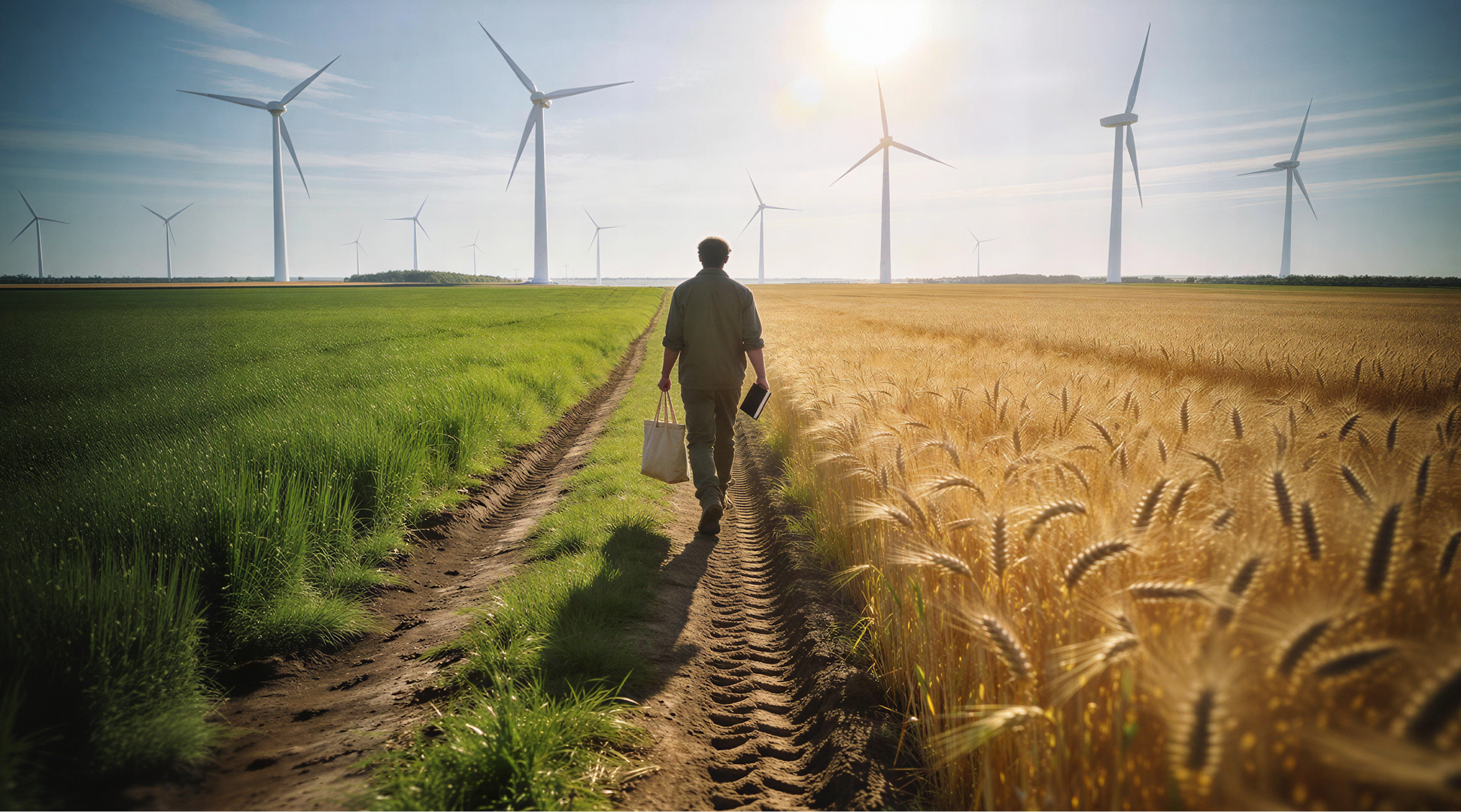
Why regenerative farming is the top investment of 2026.
Regenerative farming is reshaping the future of agriculture through sustainable soil restoration, lower environmental impact, and long-term food security. Across fields we work with, growers are turning telemetry, compost programs, and crop rotation into healthier harvests — and land that performs better season after season.
From niche practice to mainstream strategy
What began as a commitment to soil stewardship is now a financial strategy. Cooperatives, regional distributors, and direct-to-consumer brands are paying more for produce backed by verified regenerative practices. Farms that restore organic matter, protect biodiversity, and cut synthetic inputs are seeing stronger margins — not in spite of sustainability, but because of it.
Soil health drives the new harvest economy
Healthy soil is the foundation of every reliable yield. Cover crops, mulched rows, and reduced tillage help fields hold moisture and recover faster between harvests. When paired with soil sensors and moisture dashboards, growers can catch compaction or nutrient stress early — before it shows up in the packing shed.
Buyers want proof, not promises
Traceability is no longer optional. Retail partners want to know where crops were grown, how water was managed, and whether organic certification was maintained at every step. Farms that document field activity — from planting dates to post-harvest handling — build trust faster and secure longer contracts.
AgTech makes regeneration scalable
Precision irrigation, field mapping, and harvest monitoring turn regenerative principles into repeatable workflows. Agronomists, field crews, and operations teams can coordinate from a single view, reducing waste and keeping certification audits straightforward across every hectare TerraRoot supports.
The road ahead: regeneration as the new standard
In 2026, regenerative farming is not a trend — it is the baseline for resilient food production. The growers investing in soil biology, transparent data, and certified organic systems today are building harvest economies their communities will depend on for decades. For TerraRoot, that is not just good farming. It is the future of food.